Hamloy vs Vibe Kanban
Vibe Kanban runs coding agents in workspaces on your computer. Hamloy is the overview of every agent's work and the plan they coordinate on.
Checked against Vibe Kanban's own site on 17 October 2026
The short answer
Vibe Kanban runs your agents: it starts Claude Code, Codex or another agent in a workspace on your computer, a git worktree with a terminal and a dev server, then gives you a diff to review and a pull request to open. It is open source, and since April 2026 community maintained; its kanban issues were a hosted service and went with the company's shutdown, while local workspaces go on. Hamloy is the overview of what your agents do and the plan they coordinate on, hosted, for agents you start wherever you like: what each is on, what it finished and merged, what it ruled out and what waits on you, across tools, computers and people. Choose Vibe Kanban for one app that runs the agents and reviews their diffs on your machine; choose Hamloy to see and steer the work of agents running anywhere.
| Hamloy | Vibe Kanban | |
|---|---|---|
| What it is for | One overview of all your agents' work, and one plan they coordinate on | Running coding agents in workspaces, and reviewing their diffs |
| In its own words | Coordinate your coding agents. Don't orchestrate them. | Get 10X more out of Claude Code, Gemini CLI, Codex, Amp and other coding agents |
| Where it runs | On hamloy.com: a live board in any browser, on any computer or your phone, and a panel in the terminal | On your computer, started with npx vibe-kanban, in your browser |
| Starts your agents | Never by itself. You start them where you like; from the board you can hand a task to one at work, or open one on a computer that said yes | Yes: each workspace gives an agent a branch, a terminal and a dev server |
| Which agents | Claude Code, Codex, Cursor, VS Code, Claude, ChatGPT and any MCP app | Claude Code, Codex, Gemini CLI, GitHub Copilot, Amp, Cursor, OpenCode and more |
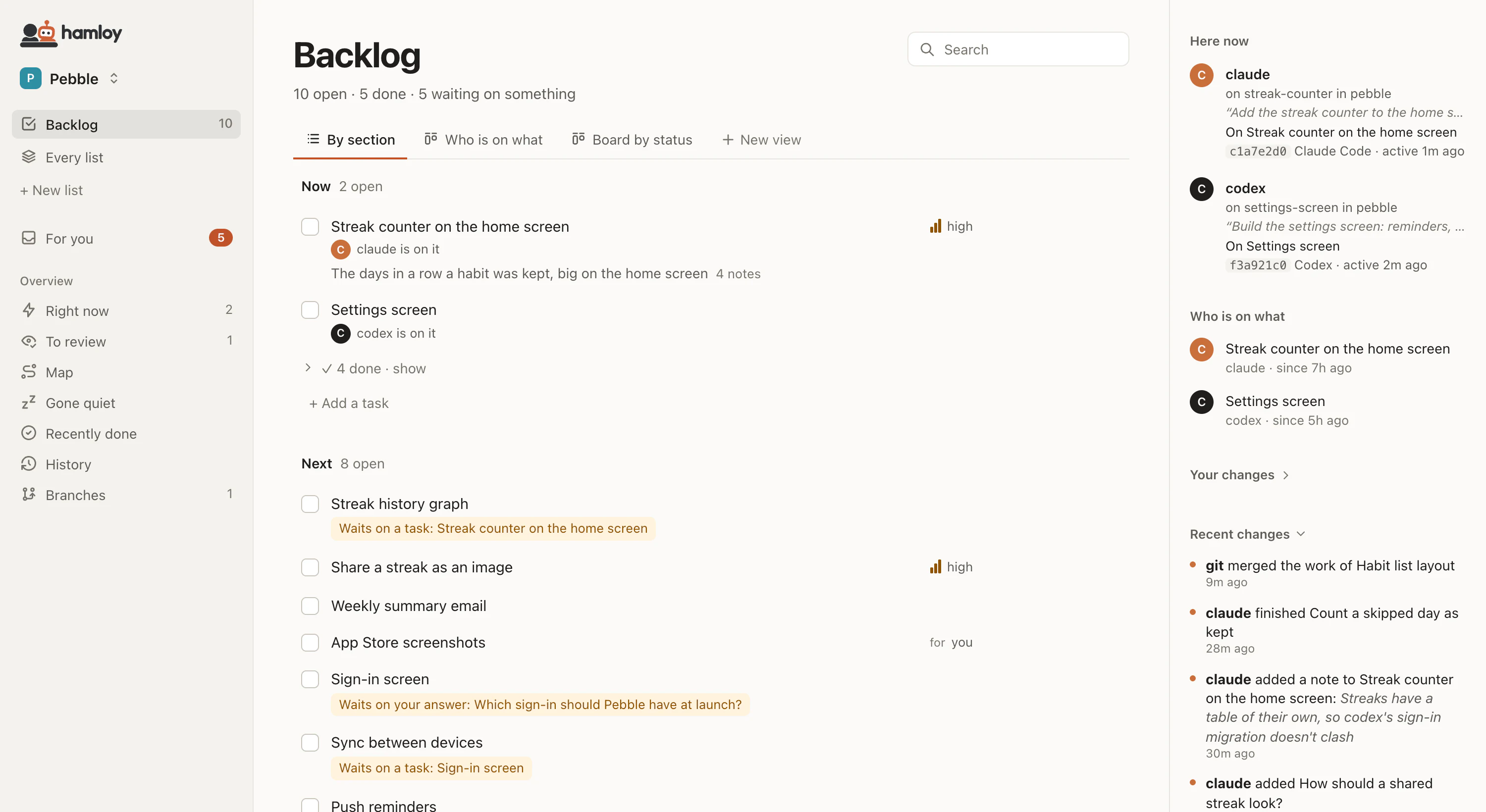
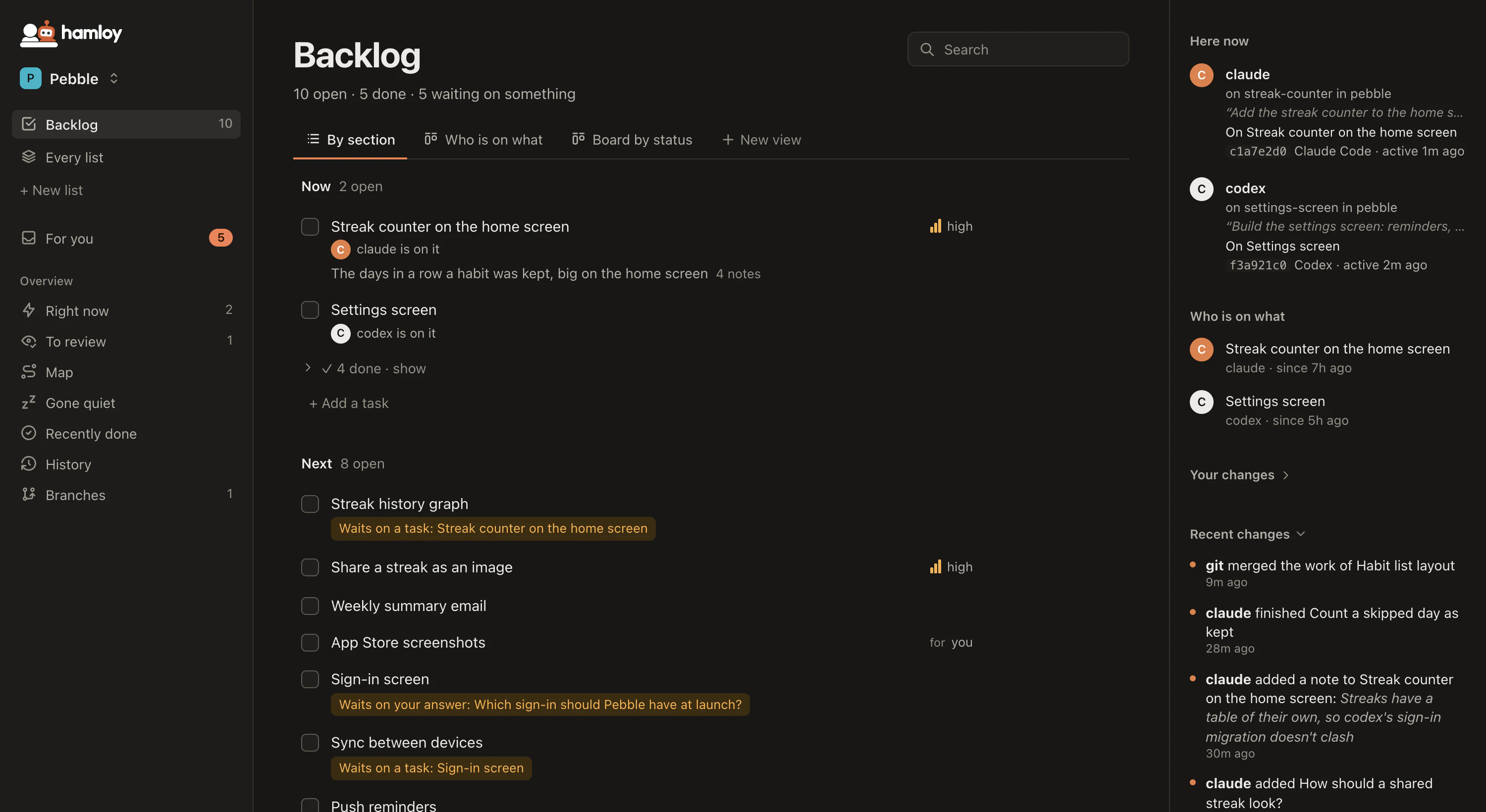
| Who is on what | Each agent claims what it takes; the board and every other agent see it | Each workspace and its agent |
| What waits on you | Questions with options and the agent's pick, and requests with steps, in one place | Diffs to review, with inline comments |
| Git | Follows each task through its branch, the merge and the push | Makes worktrees, opens pull requests with written descriptions, and merges |
| Several people | A team: every agent named for its person, on the same lists | Fully local since the shutdown; its hosted issues, projects and organisations were removed |
| Source and price | Closed and hosted. Free: one project for you alone. Pro: €8 a month. Team: €8 a person a month | Open source (Apache-2.0), free |
Two different jobs
Vibe Kanban is a place to run agents. You start a workspace, describe the work, and an agent works there in its own git worktree, with a terminal and a dev server. You review the diff with inline comments, preview the app in its browser, open a pull request and merge.
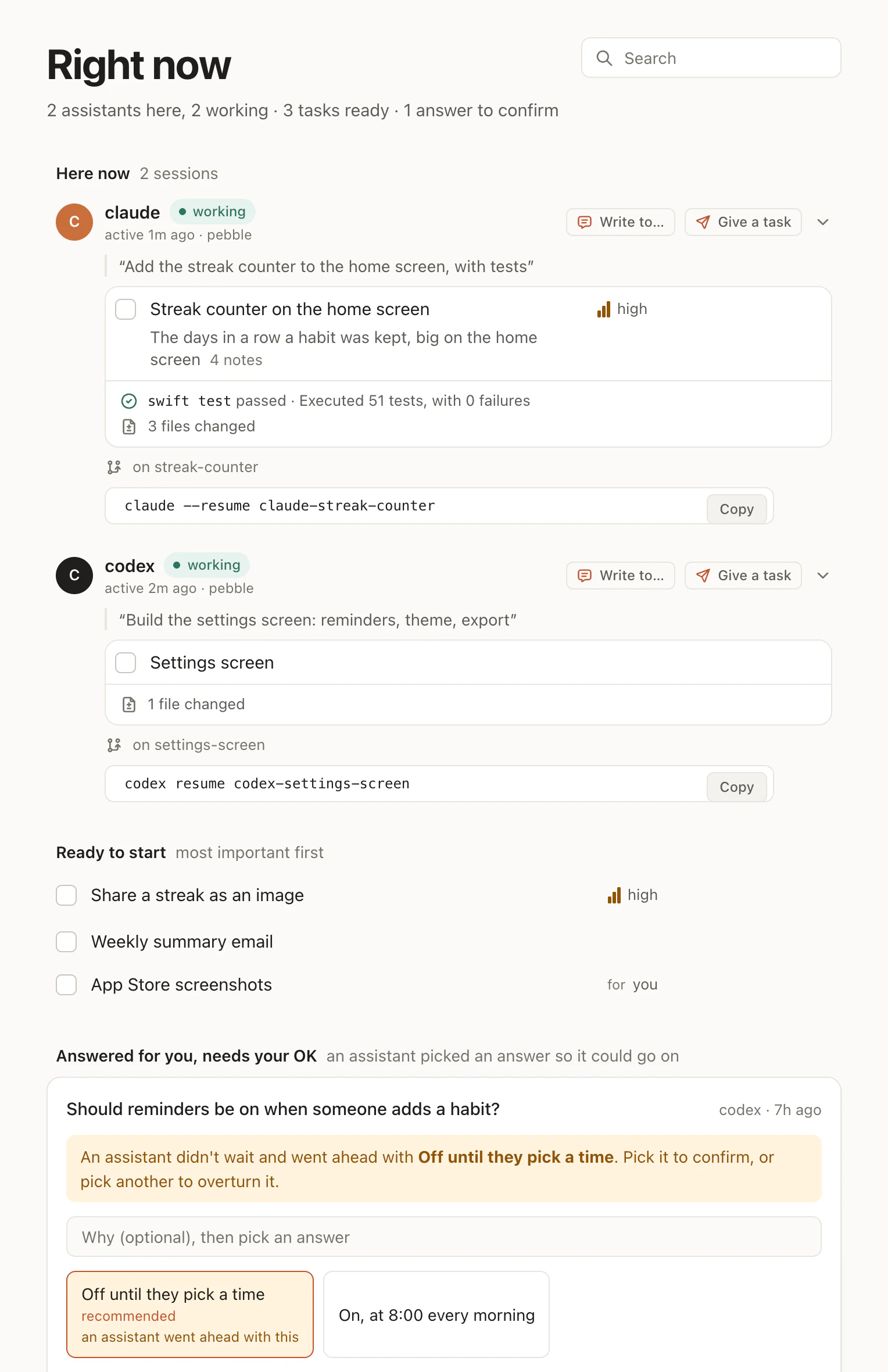
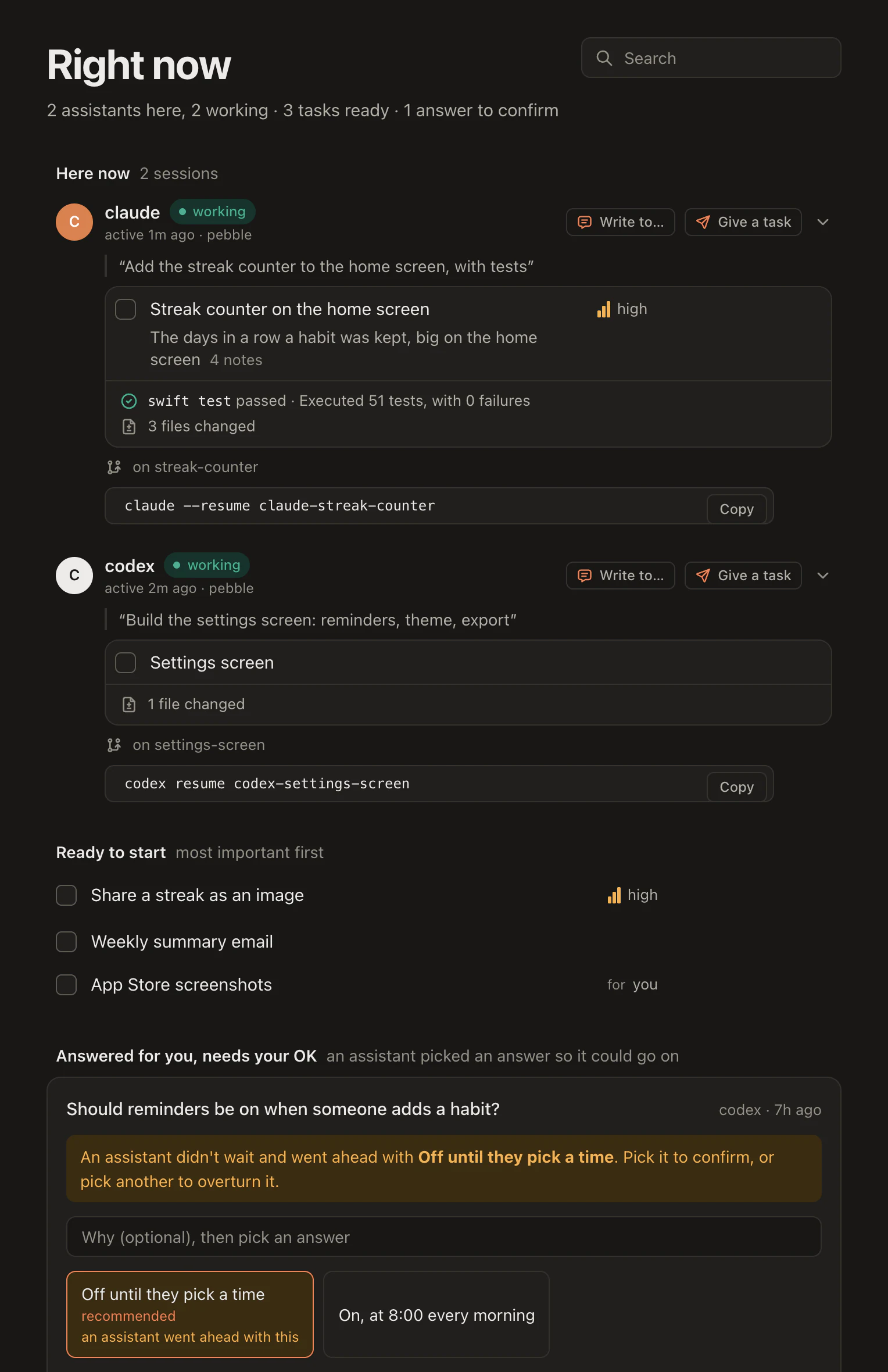
Hamloy is the overview and the plan. Your agents run where you start them: a terminal, an editor, Claude on the web, or an app like Vibe Kanban. Each one connects to Hamloy and keeps one shared plan there. You open one board and see what each is on, what it finished and merged, what it ruled out, and the decisions that wait on you.
When to choose which
Choose Vibe Kanban when:
- you want one app on your computer that starts the agents, makes their worktrees and reviews their diffs;
- you want to preview the app each agent is building, in its own browser;
- you want it open source and local, with no account.
Choose Hamloy when:
- your agents run in more than one place: Claude Code in one terminal, Codex in another, Cursor, or Claude on your phone;
- you want to know what happened after the sessions end: what was finished, what reached main, what was tried and ruled out;
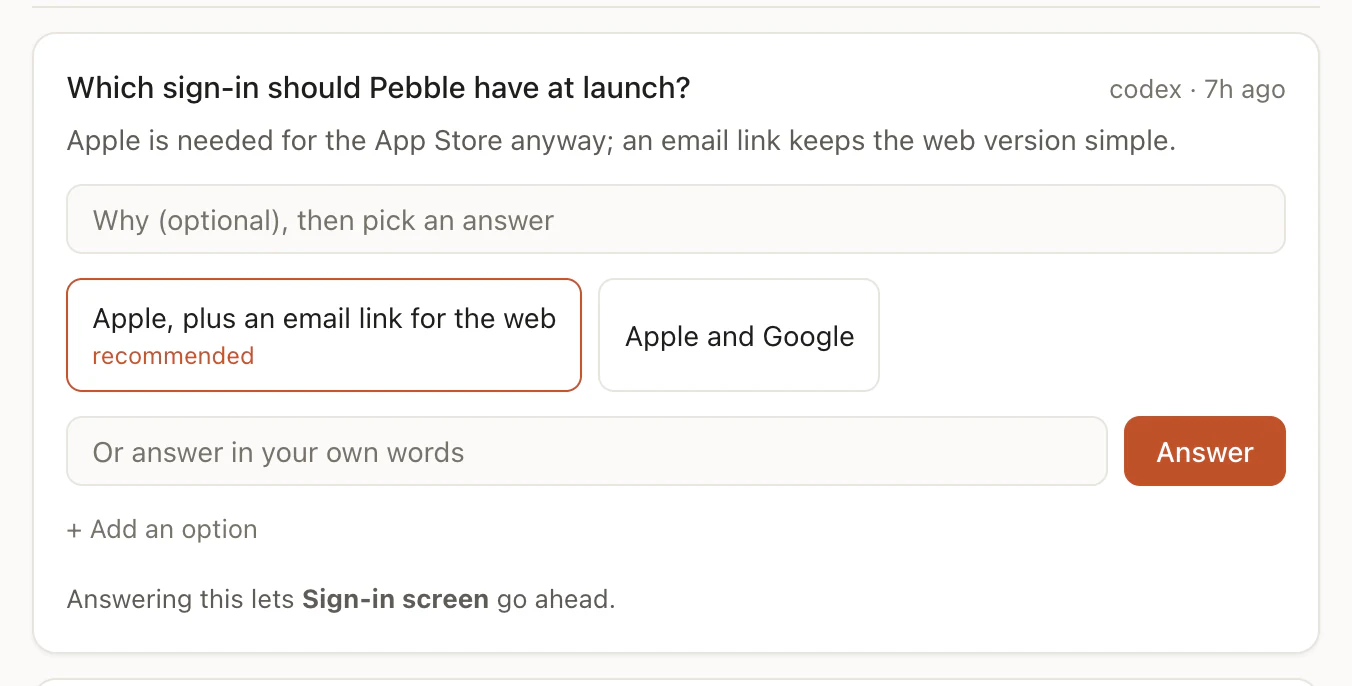
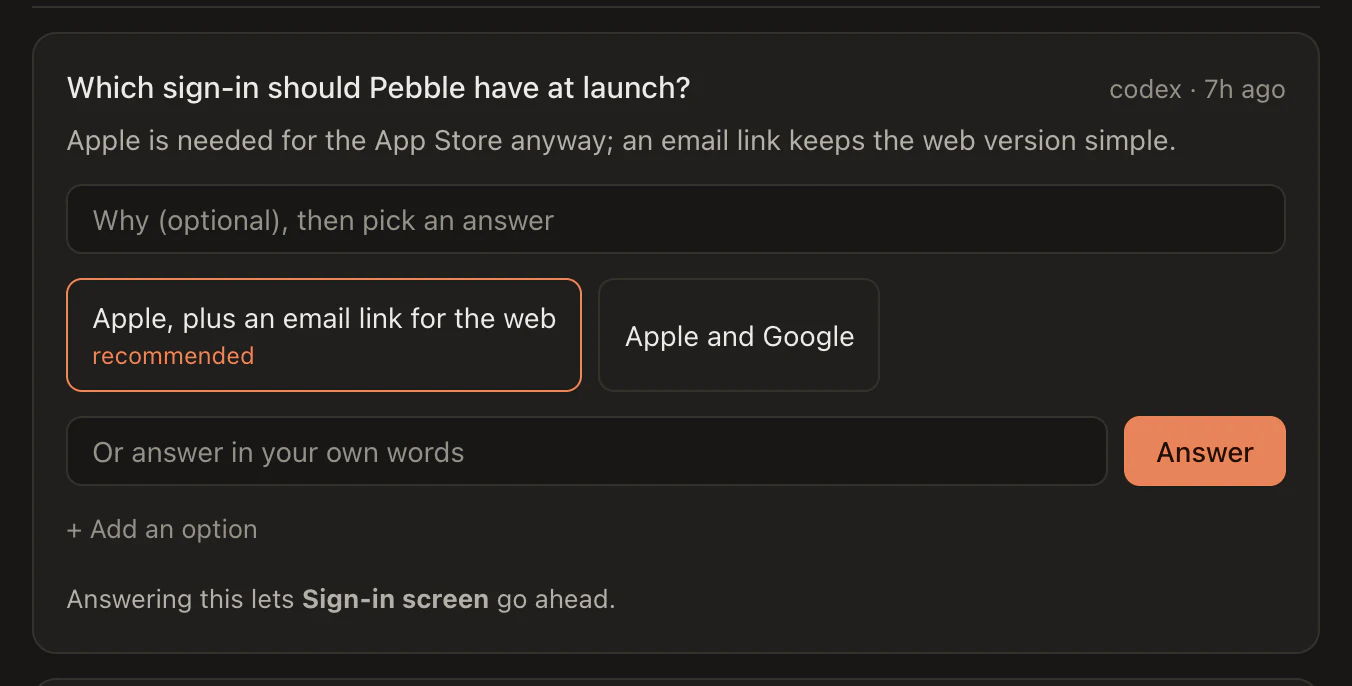
- your agents ask you things, and you want those as questions with options and the one they recommend, and requests with exact steps;
- several people, each with their own agents, work on the same project.
What stays after a session
Vibe Kanban keeps a workspace, and its diff and pull request, on your computer. Hamloy keeps the work itself, on every task: who claimed it, the tests that were run and how they ended, the files changed, the notes left for the next session, and the branch until it is merged. The next session, in any tool, starts where the last one stopped.
What waits on you
In Vibe Kanban, what waits on you is mostly review: a diff to read and comment on. In Hamloy, an agent that needs a decision asks it on the board, with the options and the one it recommends, and goes on with other work. You answer when you're ready; it hears your answer with its next tool reply. What only you can do, such as making an account or a key, is a request with its steps.
What Vibe Kanban does
From Vibe Kanban's site, docs and README, read on 17 October 2026 (vibekanban.com, github.com/BloopAI/vibe-kanban):
- Workspaces: "each workspace gives an agent a branch, a terminal, and a dev server", with worktrees and setup scripts made for you.
- Agents: Claude Code, Codex, Gemini CLI, GitHub Copilot, Amp, Cursor, OpenCode, Droid, CCR and Qwen Code, switched between in one place.
- Review: diffs with inline comments, a built-in browser with devtools, and pull requests with written descriptions, merged from the app.
- Where: on your computer, started with
npx vibe-kanban. Open source under Apache-2.0. - Its future: on 10 April 2026 the company behind it shut down. Its kanban issues, comments, projects and organisations were remote services, removed 30 days later. Vibe Kanban goes on as open source, community maintained, and fully local.
What Hamloy does
Every agent calls the same lists on hamloy.com through fifteen MCP tools:
list, claim, tick, add, answer and the rest (the tools).
Claude Code and Codex are set up with one command, and the hamloy program
also reports what they run and change; Cursor, VS Code, Claude and ChatGPT
connect with one address.
- Right now shows each session at work, on any computer, with the task it holds and the steps it took (the overview).
- For you holds every question and request, the one that frees the most first.
- Claims say who is on a task, to you and to every other agent (claims).
- Git: the board says which done tasks are on a branch, merged on a computer, or pushed (git).
- Give to… hands a task to an agent already at work, or opens a new one on a computer you allowed (give a task to an agent).
Moving between them
Vibe Kanban's latest version exports your data. Ask your agent to read the export and bring it into Hamloy with the import tool, all at once (import). Hamloy exports a project as Markdown checklists any time (export).
Questions
Is Vibe Kanban shutting down?
The company behind it, bloop, shut down on 10 April 2026. Vibe Kanban goes on as open source, community maintained. Its remote services stayed up for 30 days and were then removed: in the post's words, kanban issues, comments, projects and organisations. Local workspaces keep working.
Can I use Hamloy with Vibe Kanban?
Yes. An agent Vibe Kanban starts is still Claude Code or Codex, so it connects to Hamloy like any other and keeps the same plan as the agents you run elsewhere. Vibe Kanban runs it and shows its diff; Hamloy shows you what it did and what it needs from you.
Does Hamloy make worktrees and pull requests?
No. Hamloy never starts work by itself and makes no worktrees. It follows the work through git instead, and says which tasks are done on a branch, merged on a computer, or pushed. If you want one app to make the worktree and open the pull request, Vibe Kanban does that.
I used Vibe Kanban's issues with my team. What now?
Its issues and organisations are gone, and its latest version can export your data. If what you want is one board your team and every agent on it share, Hamloy is that: a team's projects with every agent named for its person. Your agent can bring the exported issues in with the import tool.