The next session starts where the last one stopped
A coding agent's session ends, runs out of context or is restarted, and what it knew goes with it. With Hamloy the plan and the notes on each task stay, and the next session starts from them.
You work with one agent, but never with one session. A session ends at night, its context fills and is compacted, the terminal is closed, the laptop restarts. Each time, the next session starts from the code and whatever you remember to tell it: which tasks were left, what was tried and ruled out, what you already decided.
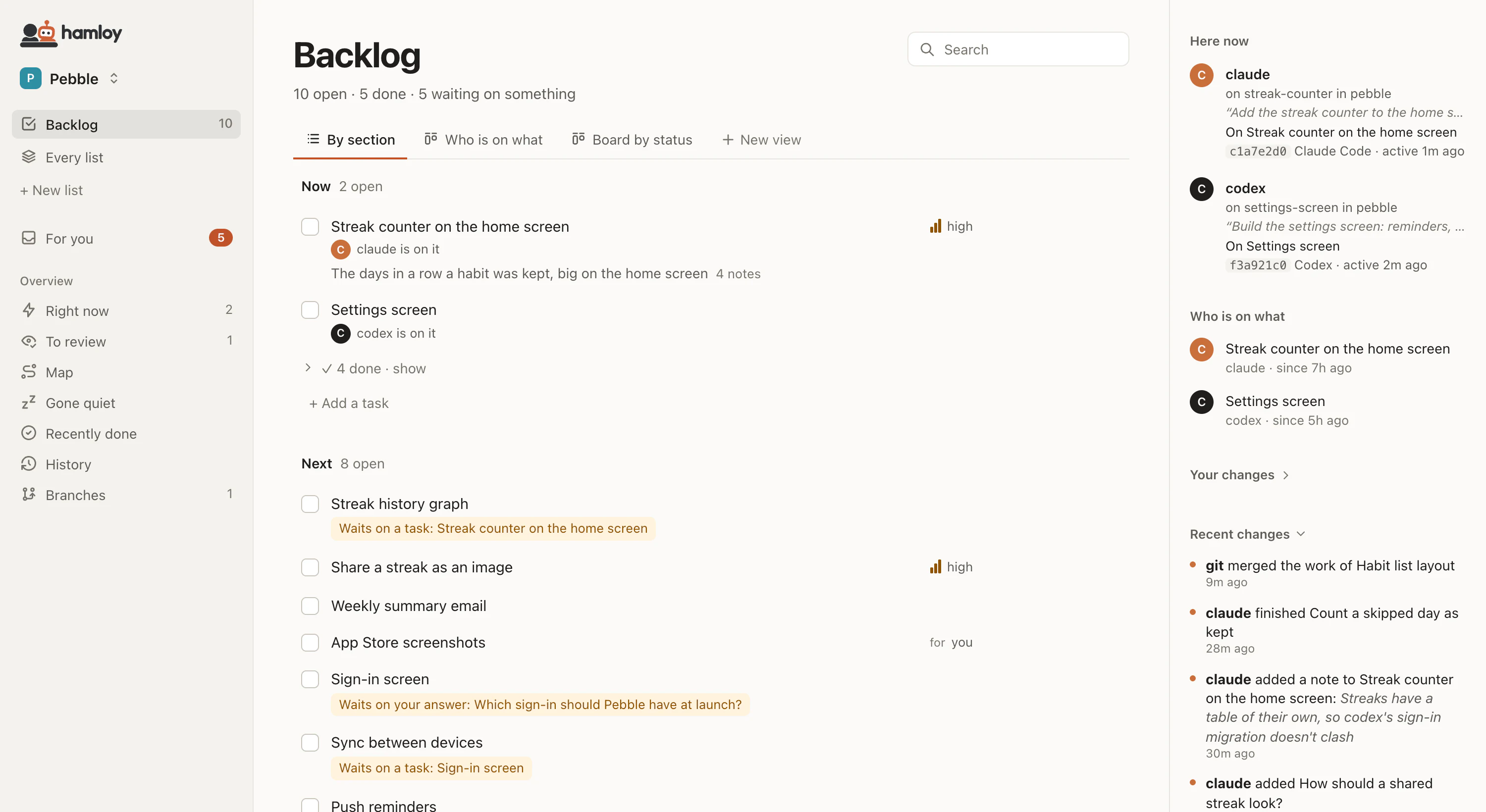
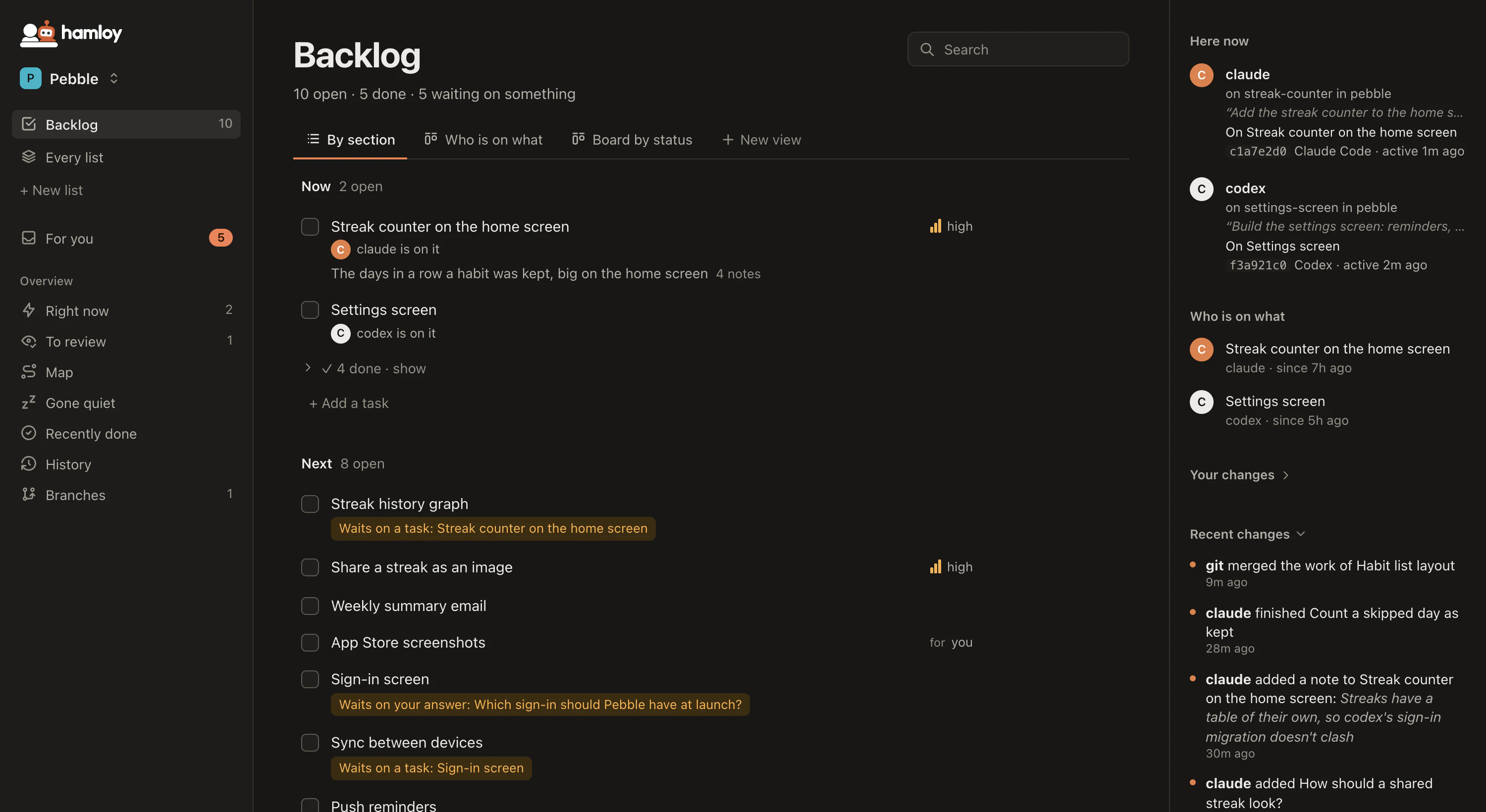
Hamloy keeps that between sessions. The plan is a list of tasks outside any one session; each task carries its notes; and every change is kept with who made it. A new session reads it all, from the first reply on.
What a new session hears first
With Claude Code or Codex set up by the hamloy program,
a session hears the project's open lists the moment it starts, and what is
next up: the most important task that is ready and free. Its first tool reply
brings the rules for working with them, so it claims a task before it starts
and ticks it when it's done, without you asking.
A session that is resumed, cleared or compacted hears what you and the other agents finished since it began, so it doesn't ask you again for something you already did.
The notes come with the task
When an agent stops partway, it leaves a note under the task: what it did, what it tried, what it ruled out and why. The next session that claims the task gets those notes in the claim's reply, before it writes a line:
⏺ hamloy - Claim an item (MCP)(key: "B-k3f9")
  ⎿ B-k3f9@4 "Streak counter on the home screen" claimed by this session
    Summary: Counting and tests done; the badge is the part left
    Its notes:
      Counting by calendar week ruled out: a missed Sunday reset every streak.
      Tests cover skipped and missed days.
So a dead end is tried once. And a decision you made in one session, recorded as an answer, is still there for the next one to read.
A restart takes its task back
When Claude Code or Codex is restarted in the same folder on the same computer, the new session takes over what the old one held, and is told so:
B-rn8g@1 claimed by this session, taken over from your earlier session 2d75bc67, quiet since this one began
It also gets the messages that were sent to the earlier session about that task, each once. A session that simply stops lets go of its claims, so the task is free for whoever comes next (claims).
You see the seams
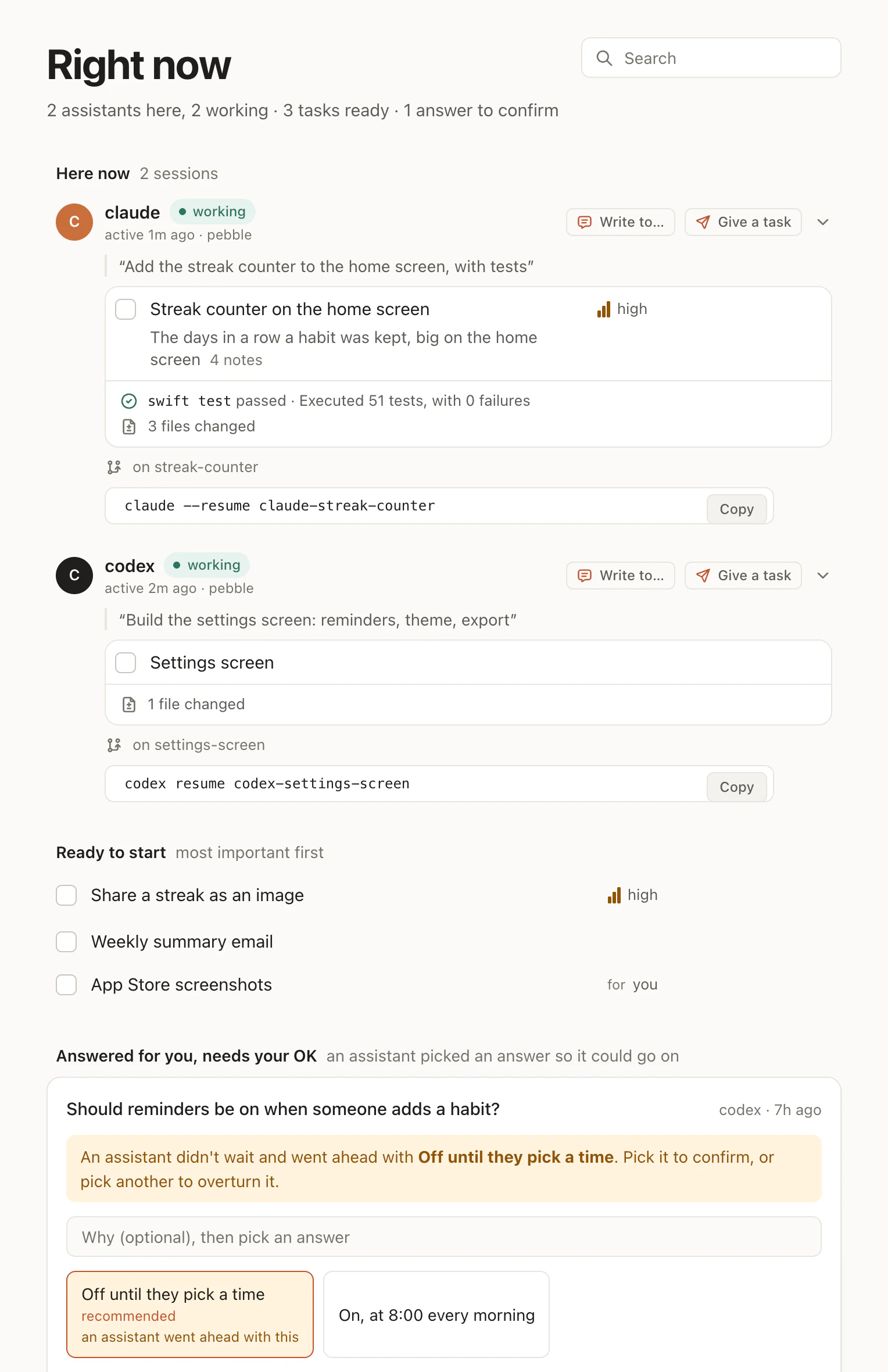
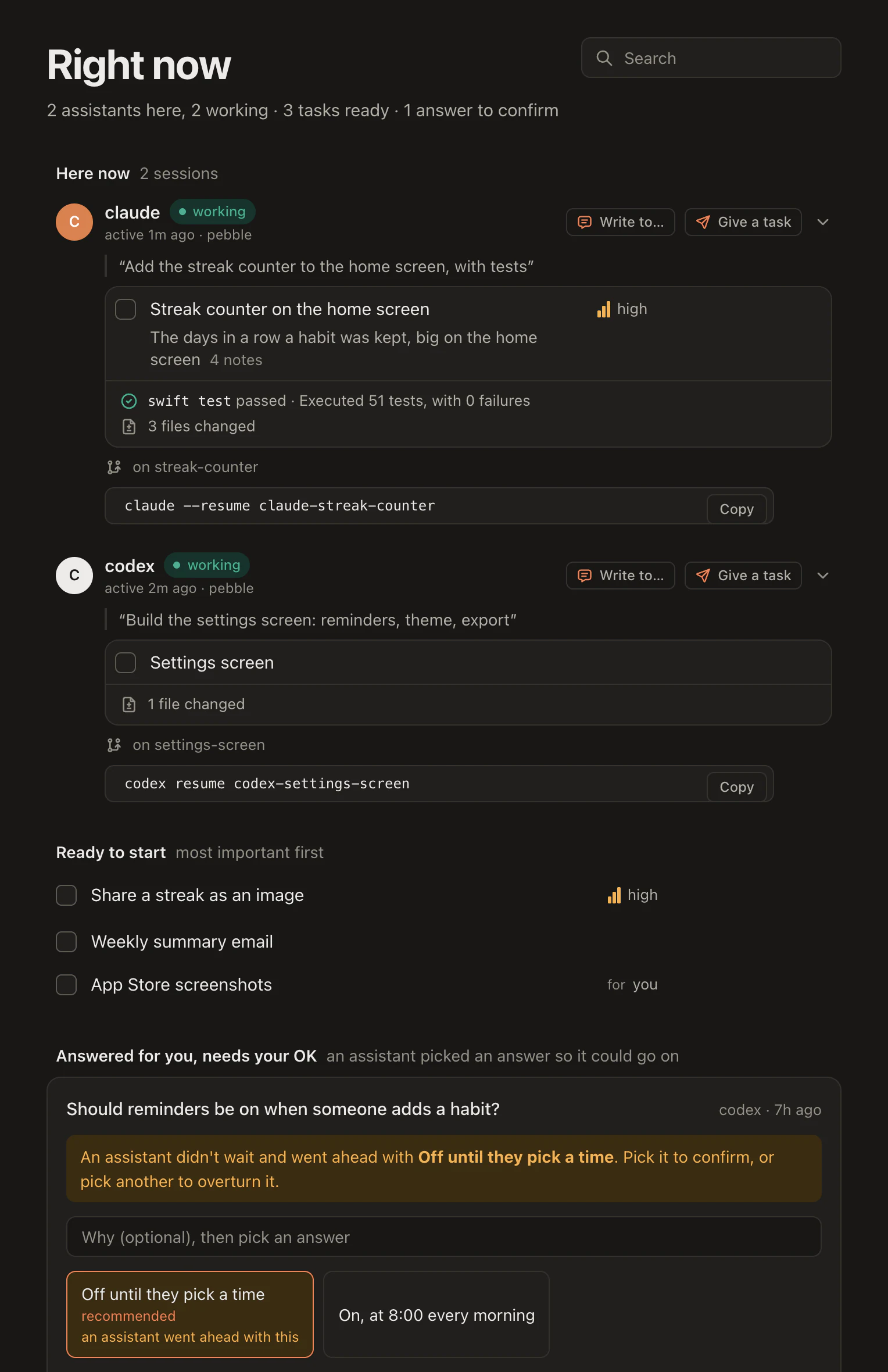
On the board, every session is a row while it works: the branch it is on, the task it holds, the tests it ran and the files it changed (the overview). When it ends, what it did stays on the tasks and in History. You can read a week of sessions as one piece of work, without opening a single transcript.
Getting started
Create a free board, name the project, and run the one paste for Claude Code or Codex in the folder you work in (Claude Code, Codex). Then ask your agent to bring in the plan you already have, from a TODO file or your notes, and start a session. Free covers one project, with every feature.