Claude Duet or Hamloy: which one keeps track of your coding agents?
Claude Duet is one agent that works in your business apps. Hamloy is the overview of every coding agent you already run. What each does, and which to pick.
25 October 2026 · Rahmakyan
Anthropic launched Claude Duet on 21 October: a proactive agent that briefs you each morning, works on its own computer in the cloud, and asks before it does anything sensitive. That sounds close to what Hamloy does. For your coding agents, it isn't. Duet is one more agent, and it works in your inbox, your invoices and your calendar. Hamloy is the overview of the agents you already run: Claude Code, Codex and Cursor, in every session, on every computer.
We build Hamloy, and we run Claude Code and Codex on it every day. Everything about Duet below comes from Anthropic's own product page and launch post, read on 25 October.
What Claude Duet is
Duet is for "professionals and small business owners with more on their plates than they can track", in Anthropic's words. You message it in one ongoing thread, by text or voice. It connects to apps like Gmail, Slack, QuickBooks, Stripe and Shopify, and checks them every few hours. Each morning it sends you a short brief, and during the day it messages you when something needs you. Before it sends a message, pays, signs or deletes anything, it shows you what it's about to do and waits for your OK.
It is a research preview on a waitlist, for Claude Pro and Max in the US, on iOS, Android and claude.ai. Team and Enterprise plans aren't included yet. Its background checks count toward your Claude plan's limits.
Duet is a good idea, done carefully. It is also a different job from ours.
What Hamloy is
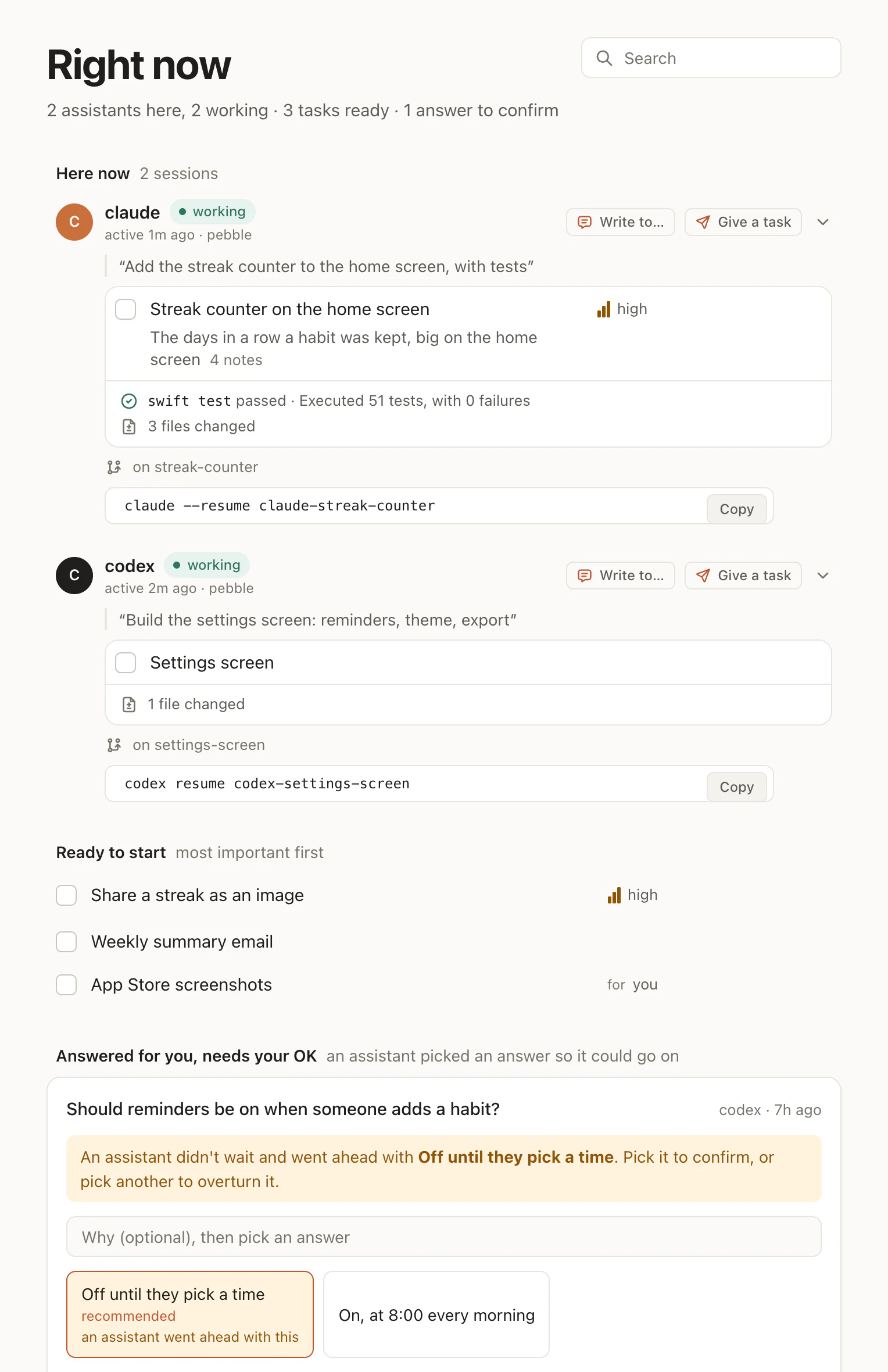
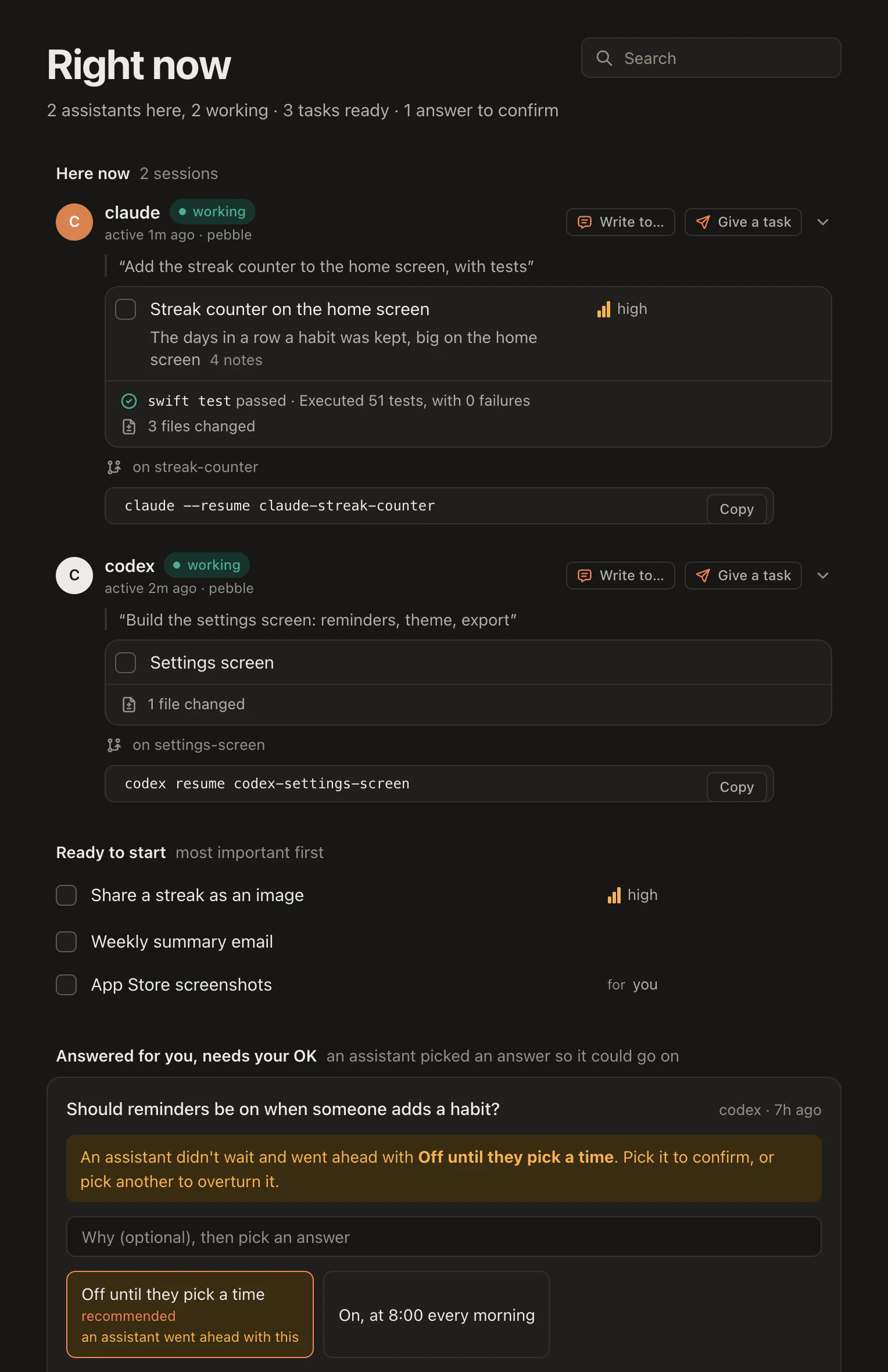
Hamloy doesn't do your work. Your agents do, in the tools you already like, and Hamloy keeps the overview of all of it. Every agent writes to one shared plan as it works:
- what it's on right now, and in which session, repo and branch
- what it finished, and whether that is merged and pushed
- what it tried and ruled out, kept on the task for the next session
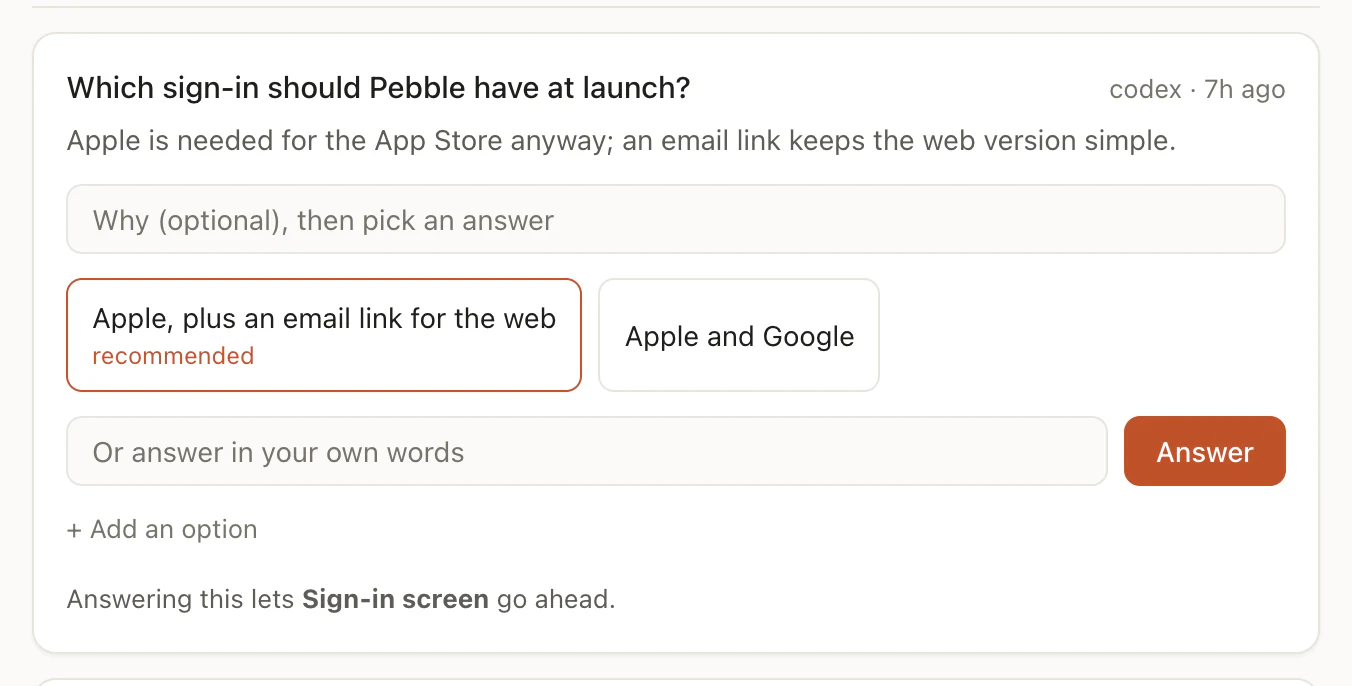
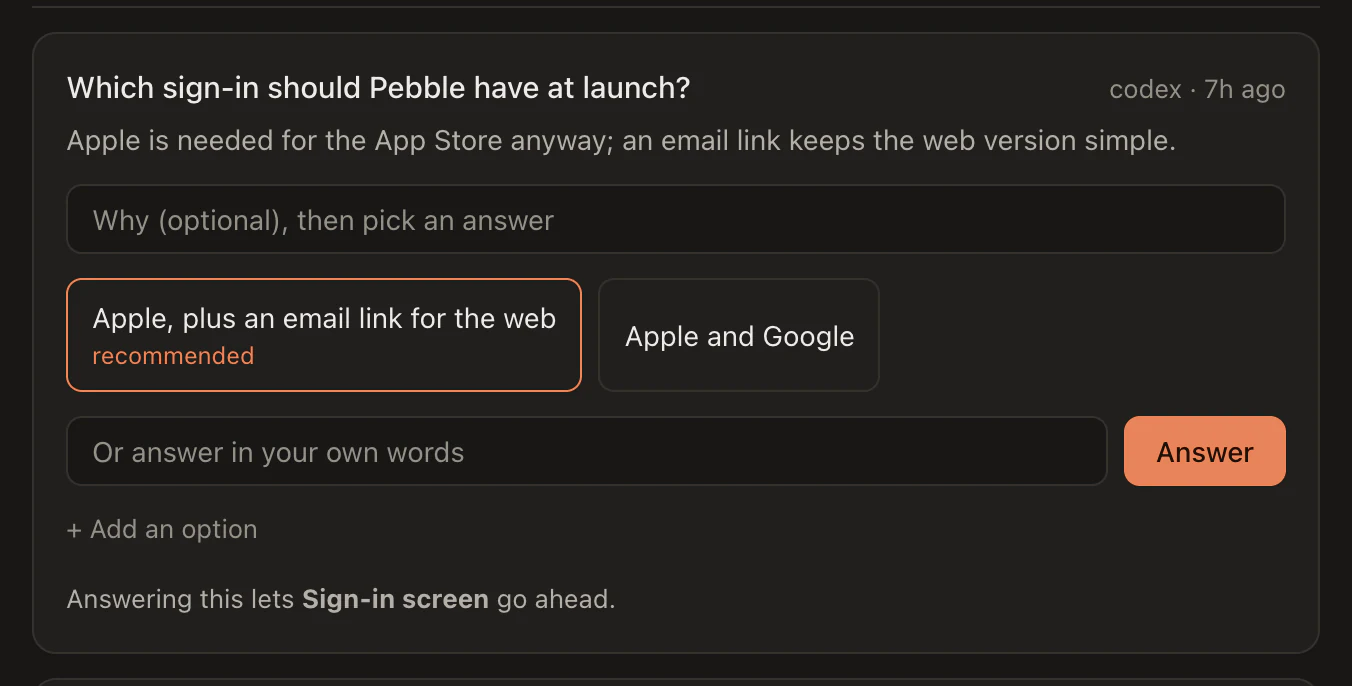
- what it needs from you: a question with options and the one it recommends, or a request with the exact steps
You read it in the agent's own terminal, in a panel beside it, on the board, or on your phone.
Where they differ, side by side
| Claude Duet | Hamloy | |
|---|---|---|
| What it is | One agent that does tasks for you | The overview of the agents you run |
| Where the work happens | Its own computer in the cloud, in your business apps | Your agents' sessions, on your computers |
| Which agents | Duet itself | Claude Code, Codex, Cursor and any MCP client |
| Several sessions or computers | One ongoing thread | Every session on every computer, on one plan |
| Other people | Not yet (no Team plans) | Share a project; each agent is named for its person |
| Git | Not part of it | Done on a branch, merged, pushed |
| When it needs you | Waits for your OK | Asks, says what it recommends, and keeps going with that; if you choose otherwise, it redoes the work |
| Where | US, Pro and Max, waitlist | Anywhere, open now |
| Cost | In your Claude plan, and its checks use your limits | Free for one project; Pro is €8 a month. Hamloy runs no model, so looking at it uses none of your limits |
Why we think Hamloy is the better pick for coding work
It works with the agents you already use. Most people who code with agents use more than one: Claude Code for one thing, Codex for another, Cursor in the editor. Duet is an Anthropic agent with its own thread; it doesn't see what Codex did last night. Hamloy is the same plan for all of them.
It lasts longer than a session. A coding agent's own plan ends when you close its window. In Hamloy, tomorrow's session opens the task and reads what tonight's tried, what failed and why.
It doesn't stop the work to ask. Duet waits for your OK, which is right for paying an invoice. For a coding decision, waiting means an idle agent. A Hamloy agent asks, says which option it recommends, goes on with that one, and rewrites it if you later pick another.
It knows when work is done. For code, done means merged. Hamloy follows the task through git: done on a branch, merged, pushed.
It's there for your whole team, today. Share a project and every agent shows up as "Sara's claude" or "Tom's codex", in any country, without a waitlist.
When Duet is the better choice
If what you need is someone to chase unpaid invoices, sort your inbox or prepare a deck, Duet is built for that and Hamloy isn't. Hamloy never starts work by itself; you start your agents, and they keep the plan.
The two also don't exclude each other. Duet can run your business apps while Hamloy keeps the overview of your coding agents.