How do you keep track of 4 coding agents at once?
Make the agents keep track of themselves. Each writes what it's on, what it finished and what it needs from you to one list, and you read that, not 4 terminals.
25 October 2026 · Rahmakyan
Make the agents keep track of themselves. Each one writes what it's on, what it finished and what it needs from you to one shared list, and you read that list instead of switching between four terminals.
Switching between terminals works while you watch them. With four agents you can't watch all of them, and every switch means scrolling back to find out what happened since you last looked. We build Hamloy and run Claude Code and Codex side by side on it every day; this is what we learned about keeping track.
Four questions you keep asking
With several agents going, you switch windows to answer the same four questions again and again:
- What is each one on right now?
- What did they finish, and is it merged?
- Which one is waiting on me, and for what?
- What did they try and rule out?
A good setup answers all four without opening a single terminal.
What the usual fixes answer
A tmux grid, or a pane each. You see all four at once, which helps for the first question while they're short. Past a screen of output you're reading four scrollbacks again, and nothing survives closing the pane.
Claude Code's agent view. claude agents lists your Claude Code sessions on one screen: which are working, which need your input, which are ready for review. That answers the third question for Claude Code. It shows the sessions, not the plan they work from, and it doesn't include Codex or Cursor. The comparison has the details.
A status file each agent writes. A STATUS.md or a line in TODO.md, by a rule in CLAUDE.md. It lasts longer than a session, but each worktree gets its own copy, and the copies drift apart (more on that in where to keep the plan when your agents work in worktrees).
One list the agents keep
The fix that answers all four questions moves the bookkeeping to the agents. They already know what they're doing; they only need one place to write it that all of them share.
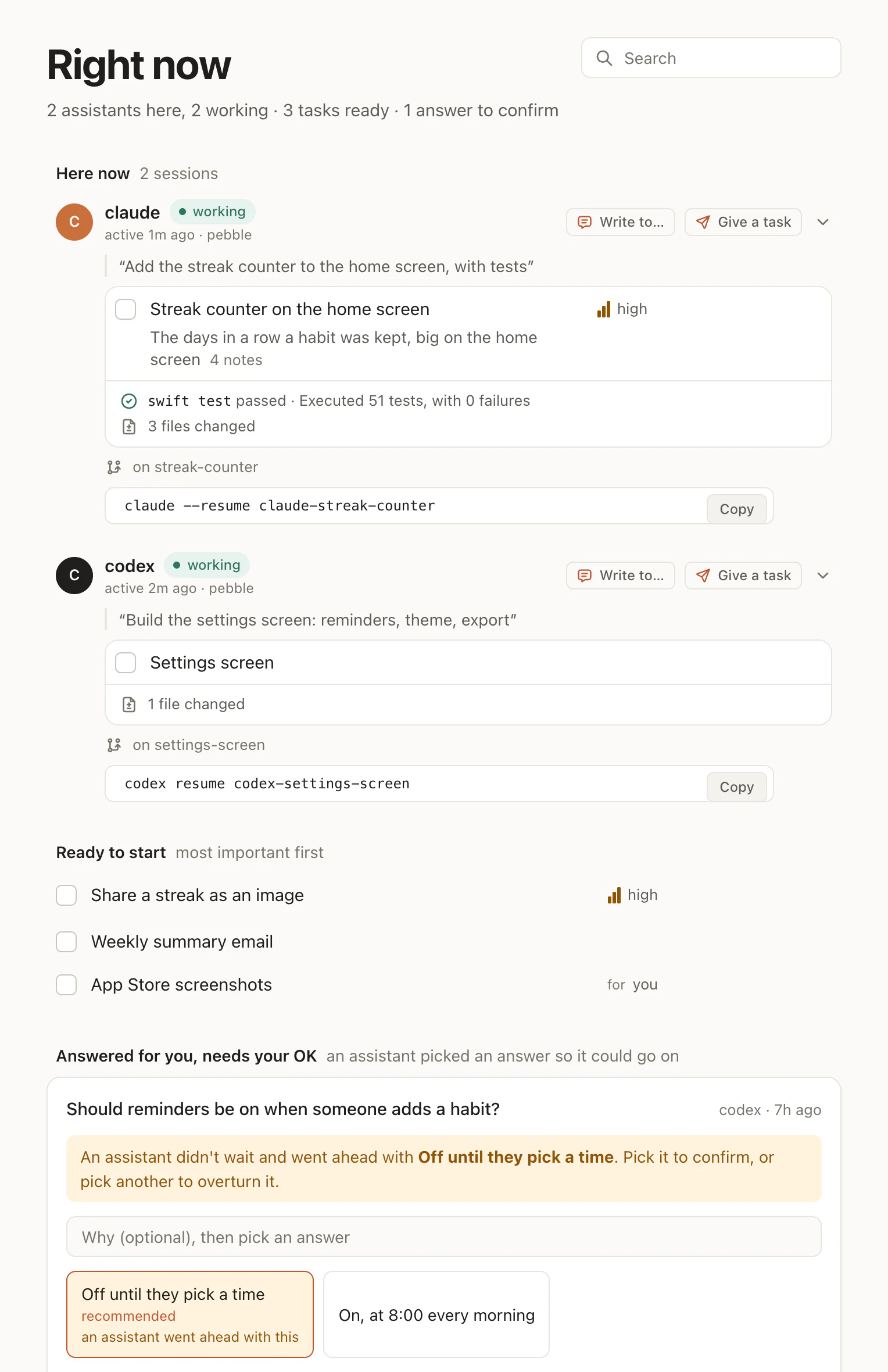
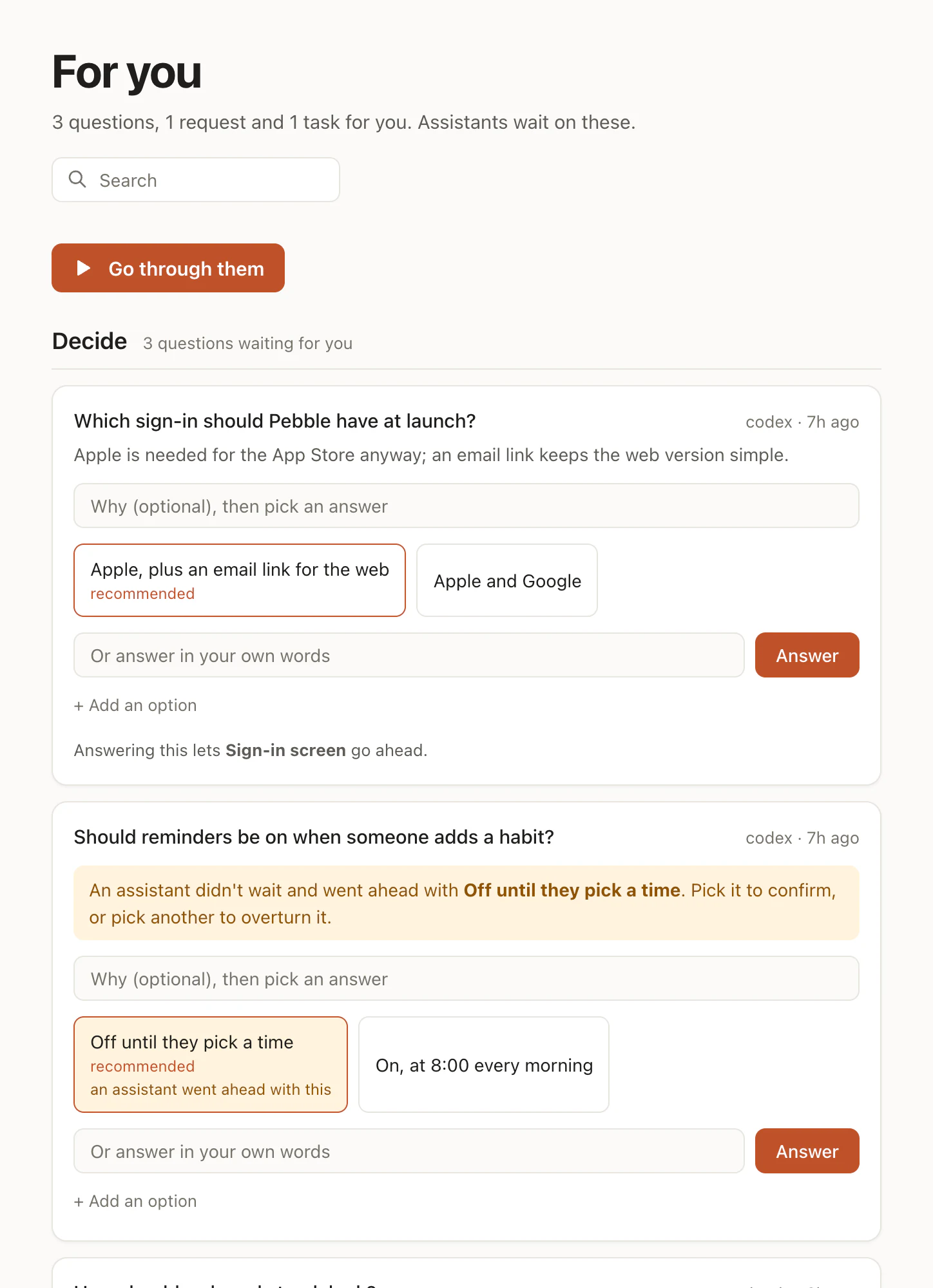
In Hamloy, each agent claims the task it takes, notes what it tried and ruled out on the task, and ticks it when it's done. When it needs a decision from you, it leaves a question with its options and the one it recommends, and goes on with something else. Hamloy follows the work through git, so a task finished on a branch says "not merged yet" until it reaches main. It works the same for Claude Code, Codex and Cursor, in any worktree, on any computer.
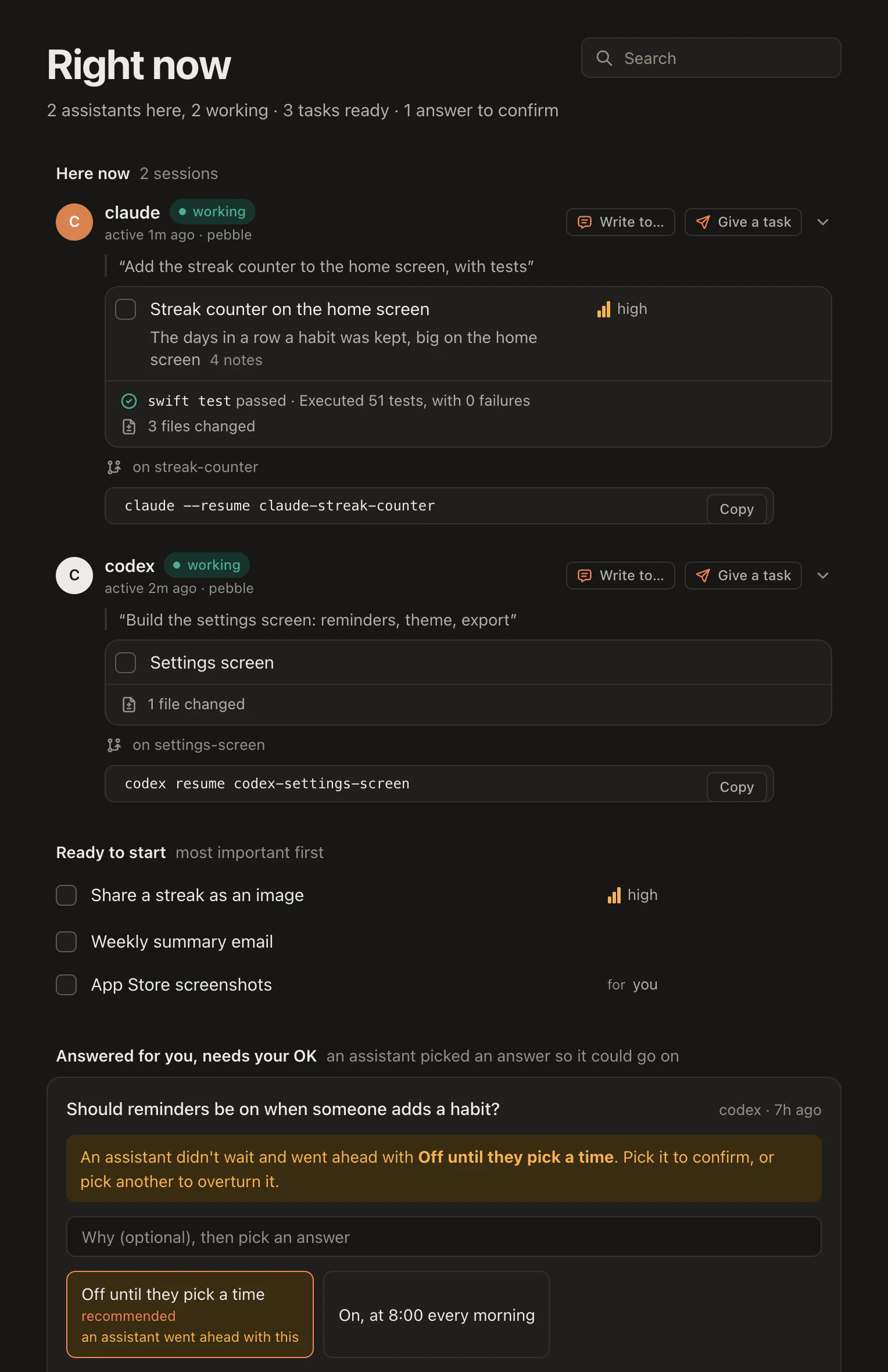
Then the four questions each have one page. Right now shows what every session is on:
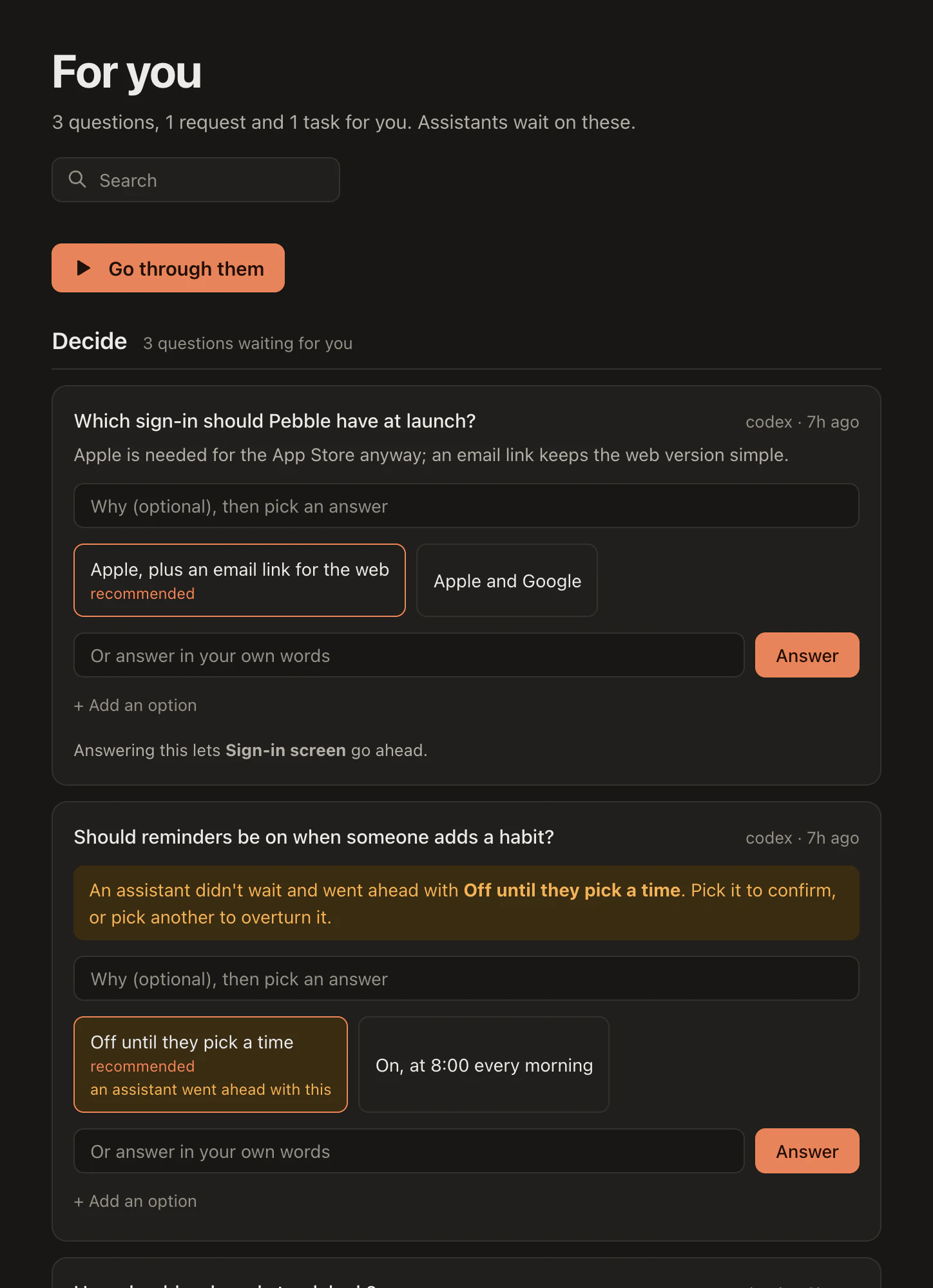
For you shows what waits on you, the one that frees the most work first:
You read those two pages instead of four terminals, and the agents keep them current. The step-by-step setup is in how to keep track of several agents on one project.